Oro Valley, Arizona
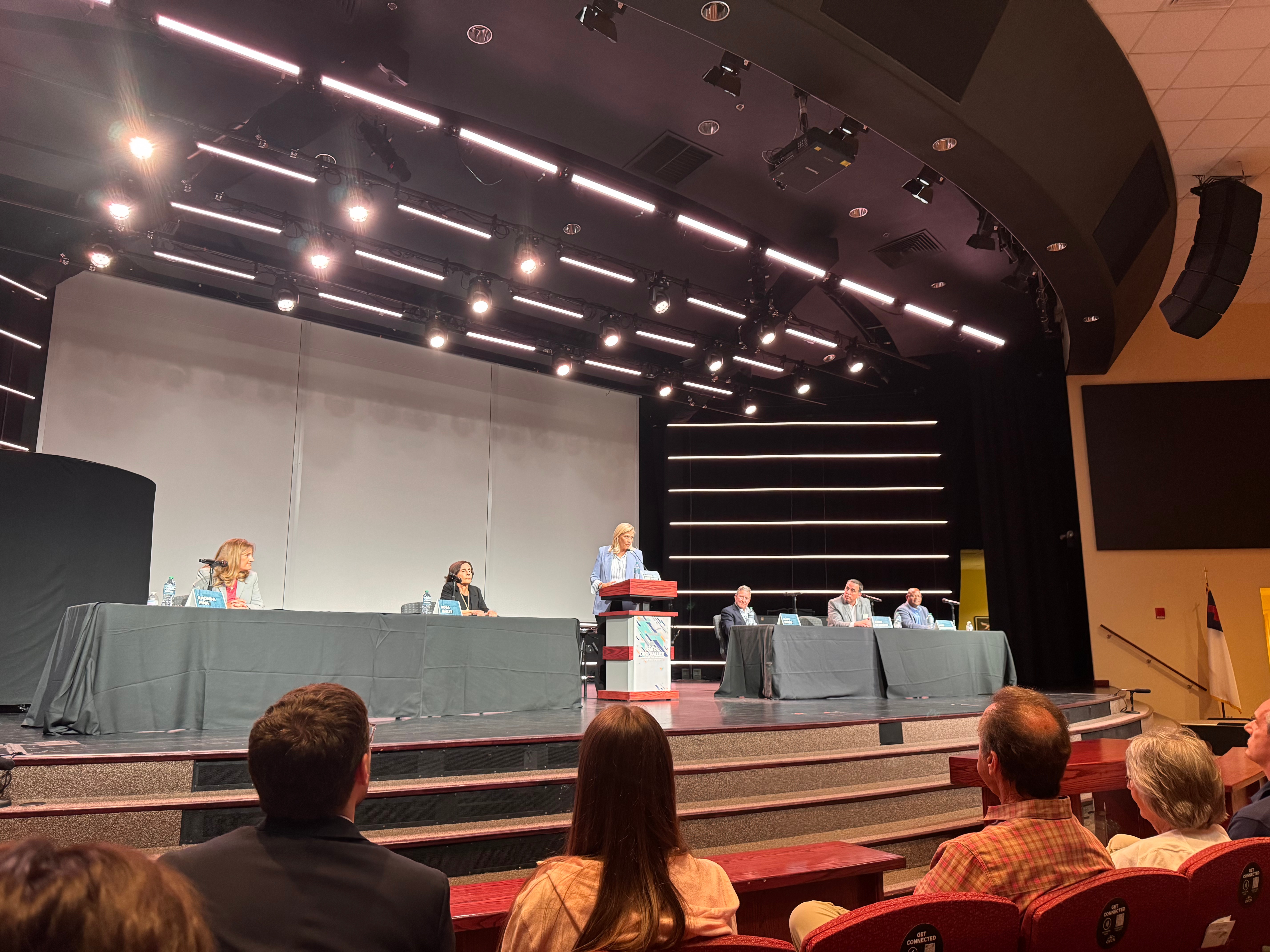
On Thursday evening, April 23, 2026, the Oro Valley Chamber of Commerce hosted a candidate forum at the Oro Valley Church of the Nazarene (500 W. Calle Concordia). Residents gathered to hear from five Town Council hopefuls — Rhonda Piña, Christopher DeSimone, Matt Wood, Jacob Herrington, and Rosa Dailey — as they made their cases ahead of the upcoming primary election. Here’s a full recap of the evening’s highlights.
MEET THE CANDIDATES
Rhonda Piña
Piña opened with a platform centered on public safety, accountability, and experience. Throughout the forum she proved to be one of the most candid voices on the stage, repeatedly urging the town to be honest with itself about its financial realities — including what she described as a $4–5 million annual shortfall and roughly $45 million in overall debt. She emphasized that revenue generation doesn’t happen overnight and that the town must pair any annexation strategy with disciplined spending restraint.
Christopher DeSimone
DeSimone has called Oro Valley home since 1995, where he raised his family. Calm, composed, and conversational throughout the forum, he spoke about drawing on that lived experience to help move Oro Valley forward and make the town more vibrant. He made a point of addressing the full spectrum of residents — those on fixed incomes as well as younger families — and was among the most vocal about the town’s need to improve its relationship with local businesses and rethink its management culture.
Matt Wood
Wood, who cited his roots in Oro Valley going back to 2014, spoke about his love of the area’s views and desert landscapes. He highlighted his experience on a homeowners association finance committee. His delivery leaned heavily on prepared notes, which dampened some of his connection with the audience. His core platform point: continue to limit the height of buildings to preserve the community’s character.
Jacob Herrington
Herrington serves as vice president of a large HOA and leaned into that credential throughout the night. He described himself as a problem solver and open-door type of person, comfortable dealing with large budgets and complex stakeholder dynamics. His overarching message was that Oro Valley needs to be more business-friendly and take steps to stop the “leakage” of local spending to neighboring communities.
Rosa Dailey
Dailey came to the forum with a reputation for getting things done, and she didn’t shy away from her skepticism of large-scale development. Her presentation style was direct and unapologetic — not always warm, but consistent. She frequently championed the record of the current Town Council and offered some of the more optimistic takes of the evening on Oro Valley’s economic trajectory.
THE BIG ISSUES
Revenue & Growth: Can Oro Valley Close the Gap?
The forum’s moderators raised the town’s funding challenge early: Oro Valley relies heavily on sales tax revenue, which has shown signs of leveling off, while construction-related tax income has also softened. Each candidate offered a different diagnosis.
Rosa Dailey pushed back on doom-and-gloom framing, pointing out that 46 businesses opened in Oro Valley last year and noting an annexation opportunity between Tohono O’odham land and Westward Look. She remained the most upbeat voice on the town’s current direction.
Matt Wood agreed there is money to be found — particularly through parks and recreation — and suggested raising fees for park usage as a revenue lever.
Christopher DeSimone called annexation critical and drew a wide potential boundary: the Foothills Mall area, Encantada, and all the way to Orange Grove Road. He also gave voice to local business owners’ frustration with Oro Valley’s Destination Marketing Organization (DMO), arguing the town is leaving tourism dollars on the table.
Jacob Herrington zeroed in on OV’s need to become more business-friendly and called out the “spending leakage” problem — residents taking their dollars elsewhere because of gaps in local offerings.
Rhonda Piña was the most direct about the numbers, citing the $4–5 million shortfall and $45 million in debt. She said annexation will be necessary but must be paired with serious spending discipline, and called for transparency with the community about the town’s true financial position.
Building a Stronger Business Community
A second question focused on what each candidate would do to cultivate a stronger local business environment.
Matt Wood said he would dig deeper into the town’s business development tools and strategies.
Christopher DeSimone went further, arguing that Oro Valley has fallen behind on business relations and that the problem is partly cultural — pointing to issues within town management itself.
Jacob Herrington offered a sobering data point: commercial real estate brokers are reportedly steering clients away from Oro Valley because of the town’s processes and timelines.
Rhonda Piña called for a policy review to streamline the path for businesses, and suggested partnering with outside resources like the Tucson Airport Authority to leverage economic development opportunities.
Rosa Dailey countered with an optimistic read — noting the 46 new businesses and suggesting the town must be doing something right. She said she had spoken with a business owner just before the forum who shared a positive experience.
Annexation: How Far, How Fast?
Annexation was arguably the night’s most debated subject, with candidates staking out notably different positions on timing, scope, and risk.
Christopher DeSimone pushed for widening OV’s footprint while taking small businesses seriously and making a bigger play for tourism revenue.
Jacob Herrington called for smart, healthy growth — and made a point of recognizing the Oro Valley Police Department as among the best in Arizona, an asset worth protecting and building around.
Rhonda Piña acknowledged that annexation will be necessary but warned it must be done right. She criticized a past council for backing away from a Tangerine/Thornydale annexation around election time — a retreat she said cost the town over a million dollars.
Rosa Dailey raised the water issue as a hard constraint: with roughly 3,000 residential units already approved, she argued the town cannot afford to jeopardize its water supply through unchecked annexation. She called the issue “problematic” and urged caution.
Matt Wood kept it simple: any annexation has to make financial sense. He noted that development cap rates have dropped by 40% and advised holding cards close until the numbers work.
Housing Affordability
The final major topic touched on one of Arizona’s most pressing community concerns — how to keep Oro Valley accessible to working and middle-class residents.
Jacob Herrington pointed to tax-break incentives as a tool for encouraging affordable housing development.
Rhonda Piña said the conversation has to acknowledge different income levels — not just high earners, but people working in smaller local businesses who are increasingly priced out.
Rosa Dailey floated a survey-based approach to understand what types of lower-cost residences the community wants, and suggested the push should come from government rather than corporations.
Christopher DeSimone drew the clearest line of the evening: no more apartments.
TAKEAWAYS
Thursday’s forum made clear that Oro Valley’s next Town Council will face genuine fiscal pressure — a revenue plateau, a debt load, and a business climate that needs attention. The five candidates offered meaningfully different visions for how to respond: Piña and DeSimone pushed for candor and structural change; Herrington brought a process-and-growth lens; Wood called for fiscal caution and height limits; and Dailey offered the most defense of the current course while also raising real concerns about water and density.
Voters will have plenty to weigh. The primary is scheduled for July 21, 2026, with early voting beginning June 24. Registration to vote closes June 22.
A recap of the Mayor forum will be released soon.
